Buy adsnetworkreview.com ?
We are moving the project
adsnetworkreview.com .
Are you interested in purchasing the domain
adsnetworkreview.com ?
domain@kv-gmbh.de · 0541-91531010
Buy adsnetworkreview.com ?
What distinguishes an LDR resistor from an NTC resistor?
An LDR (Light Dependent Resistor) is a type of resistor whose resistance decreases with an increase in the intensity of light. On the other hand, an NTC (Negative Temperature Coefficient) resistor is a type of resistor whose resistance decreases as the temperature increases. Therefore, the main distinguishing factor between the two is the parameter that affects their resistance - light intensity for LDR and temperature for NTC resistors. **
What are the tolerances for resistor chains and resistor cubes?
The tolerances for resistor chains and resistor cubes typically depend on the specific manufacturer and type of resistor used. However, in general, the tolerances for resistor chains and cubes are usually around 1-5%. This means that the actual resistance of the chain or cube may vary from the specified value by up to 1-5%. It is important to consider these tolerances when designing circuits to ensure accurate performance. **
Similar search terms for Resistor
Top-Angebote
Products related to Resistor:


-
How to calculate the equivalent resistance of a resistor network?
To calculate the equivalent resistance of a resistor network, you can use either the series or parallel resistor formula, depending on how the resistors are connected. For resistors in series, you simply add up the resistance values of each resistor. For resistors in parallel, you use the formula 1/Req = 1/R1 + 1/R2 + 1/R3 + ..., where Req is the equivalent resistance and R1, R2, R3, etc. are the resistance values of each resistor. By applying these formulas to the resistor network, you can determine the equivalent resistance of the entire network. **
-
Is this a resistor?
No, this is not a resistor. Resistors are electronic components that limit the flow of electric current in a circuit. The image provided does not show a resistor, but rather a capacitor. Capacitors store and release electrical energy in a circuit, functioning differently from resistors. **
-
How do you calculate the equivalent resistance of a resistor network?
To calculate the equivalent resistance of a resistor network, you can use either the series or parallel resistor formulas depending on how the resistors are connected. For resistors in series, you simply add up the resistance values of each resistor. For resistors in parallel, you use the formula 1/Req = 1/R1 + 1/R2 + 1/R3 + ... where Req is the equivalent resistance and R1, R2, R3, etc. are the individual resistance values. By applying these formulas, you can determine the total resistance of the resistor network. **
-
How does the flow of electricity work in a resistor network?
In a resistor network, the flow of electricity is determined by the arrangement of resistors and the voltage applied. When a voltage is applied across the network, the current flows through the resistors in accordance with Ohm's law, which states that the current is directly proportional to the voltage and inversely proportional to the resistance. The current will divide and flow through each resistor based on their individual resistance values, with the total current entering and exiting the network being the same. This flow of electricity results in the dissipation of energy as heat in the resistors, in accordance with the Joule's law. **

What is the difference between a load resistor and a regular resistor?
A load resistor is specifically designed to simulate the presence of a device in an electrical circuit, such as a light bulb or a motor, to ensure proper functioning of the circuit. It is used to test the performance of the circuit under different conditions. On the other hand, a regular resistor is a general-purpose component used to limit current, divide voltage, or provide biasing in a circuit. While both resistors resist the flow of current, a load resistor is tailored for specific testing purposes, whereas a regular resistor has a broader range of applications in electronic circuits. **
Is the LED current-limiting resistor as good as the pre-resistor?
The LED current-limiting resistor is not as good as the pre-resistor. The pre-resistor is specifically designed to limit the current flowing through the LED to a safe level, ensuring that the LED operates within its specified parameters. On the other hand, a regular current-limiting resistor may not provide the precise current regulation needed for the LED, leading to potential overcurrent and damage to the LED. Therefore, it is important to use the pre-resistor recommended by the LED manufacturer for optimal performance and longevity of the LED. **
Top-Angebote
Products related to Resistor:
-
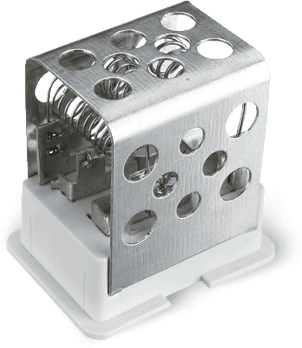
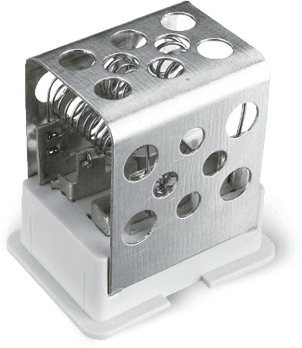
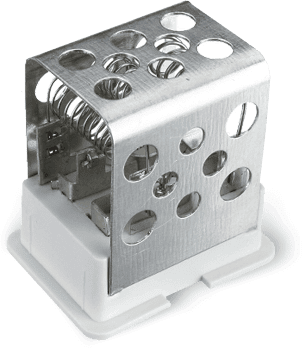
AUTOMEGA 150084310 Blower motor resistorNumber of pins: 5; Connector Shape: rectangular; Socket colour: white; Voltage [V]: 12; for OE number: 9180020; Vehicle Equipment: for vehicles with air conditioning (manually controlled), for vehicles without air conditioning9,99 £*Shipping: 8,45 £Secure redirect to the provider
-
AUTOMEGA 150110010 Blower motor resistorNumber of pins: 9; Connector Shape: rectangular; Socket colour: white; Voltage [V]: 12; for OE number: 93180051; Manufacturer Restriction: DELPHI; Vehicle Identification Number (VIN) to: 42241818, 45241818, 42641818, 48241818, 4B241818, 4G241818, 4H241818; Manufacturer: DELPHI12,99 £*Shipping: 8,45 £Secure redirect to the provider
-
What distinguishes an LDR resistor from an NTC resistor?
An LDR (Light Dependent Resistor) is a type of resistor whose resistance decreases with an increase in the intensity of light. On the other hand, an NTC (Negative Temperature Coefficient) resistor is a type of resistor whose resistance decreases as the temperature increases. Therefore, the main distinguishing factor between the two is the parameter that affects their resistance - light intensity for LDR and temperature for NTC resistors. **
-
What are the tolerances for resistor chains and resistor cubes?
The tolerances for resistor chains and resistor cubes typically depend on the specific manufacturer and type of resistor used. However, in general, the tolerances for resistor chains and cubes are usually around 1-5%. This means that the actual resistance of the chain or cube may vary from the specified value by up to 1-5%. It is important to consider these tolerances when designing circuits to ensure accurate performance. **
-
How to calculate the equivalent resistance of a resistor network?
To calculate the equivalent resistance of a resistor network, you can use either the series or parallel resistor formula, depending on how the resistors are connected. For resistors in series, you simply add up the resistance values of each resistor. For resistors in parallel, you use the formula 1/Req = 1/R1 + 1/R2 + 1/R3 + ..., where Req is the equivalent resistance and R1, R2, R3, etc. are the resistance values of each resistor. By applying these formulas to the resistor network, you can determine the equivalent resistance of the entire network. **
-
Is this a resistor?
No, this is not a resistor. Resistors are electronic components that limit the flow of electric current in a circuit. The image provided does not show a resistor, but rather a capacitor. Capacitors store and release electrical energy in a circuit, functioning differently from resistors. **
Similar search terms for Resistor
-
How do you calculate the equivalent resistance of a resistor network?
To calculate the equivalent resistance of a resistor network, you can use either the series or parallel resistor formulas depending on how the resistors are connected. For resistors in series, you simply add up the resistance values of each resistor. For resistors in parallel, you use the formula 1/Req = 1/R1 + 1/R2 + 1/R3 + ... where Req is the equivalent resistance and R1, R2, R3, etc. are the individual resistance values. By applying these formulas, you can determine the total resistance of the resistor network. **
-
How does the flow of electricity work in a resistor network?
In a resistor network, the flow of electricity is determined by the arrangement of resistors and the voltage applied. When a voltage is applied across the network, the current flows through the resistors in accordance with Ohm's law, which states that the current is directly proportional to the voltage and inversely proportional to the resistance. The current will divide and flow through each resistor based on their individual resistance values, with the total current entering and exiting the network being the same. This flow of electricity results in the dissipation of energy as heat in the resistors, in accordance with the Joule's law. **
-
What is the difference between a load resistor and a regular resistor?
A load resistor is specifically designed to simulate the presence of a device in an electrical circuit, such as a light bulb or a motor, to ensure proper functioning of the circuit. It is used to test the performance of the circuit under different conditions. On the other hand, a regular resistor is a general-purpose component used to limit current, divide voltage, or provide biasing in a circuit. While both resistors resist the flow of current, a load resistor is tailored for specific testing purposes, whereas a regular resistor has a broader range of applications in electronic circuits. **
-
Is the LED current-limiting resistor as good as the pre-resistor?
The LED current-limiting resistor is not as good as the pre-resistor. The pre-resistor is specifically designed to limit the current flowing through the LED to a safe level, ensuring that the LED operates within its specified parameters. On the other hand, a regular current-limiting resistor may not provide the precise current regulation needed for the LED, leading to potential overcurrent and damage to the LED. Therefore, it is important to use the pre-resistor recommended by the LED manufacturer for optimal performance and longevity of the LED. **
* All prices are inclusive of VAT and, if applicable, plus shipping costs. The offer information is based on the details provided by the respective shop and is updated through automated processes. Real-time updates do not occur, so deviations can occur in individual cases. ** Note: Parts of this content were created by AI.