Buy adsnetworkreview.com ?
We are moving the project
adsnetworkreview.com .
Are you interested in purchasing the domain
adsnetworkreview.com ?
domain@kv-gmbh.de · 0541-91531010
Buy adsnetworkreview.com ?
What is advertising psychology?
Advertising psychology is the study of how advertising influences consumer behavior and decision-making. It involves understanding the psychological processes that occur when individuals are exposed to advertisements, such as attention, perception, memory, and motivation. By applying principles from psychology, advertisers can create more effective and persuasive campaigns that resonate with their target audience and ultimately drive sales. Advertising psychology also explores how emotions, attitudes, and beliefs can be influenced through advertising messages. **
What is the difference between business psychology and marketing?
Business psychology focuses on understanding human behavior within the workplace, including topics such as employee motivation, leadership, and organizational culture. It aims to improve individual and organizational performance through the application of psychological principles. On the other hand, marketing focuses on understanding consumer behavior and creating strategies to promote and sell products or services. It involves market research, advertising, branding, and customer relationship management. While both fields involve understanding human behavior, business psychology focuses on internal organizational dynamics, while marketing focuses on external consumer behavior and promotion. **
Similar search terms for Harriman-House-The-Psychology
Top-Angebote
Products related to Harriman-House-The-Psychology:
-
Harriman House Same as Ever & The Psychology Of Money 2 Books Collection Set by Morgan HouselTitles in this set:1. Same as Ever2. The Psychology of MoneyDescription:Same as Ever When planning for the future we often ask, “What will the economy be doing this time next year?” Or, “What will be different ten years from now?”But forecasting is hard. The important events that will shape the future are inherently unpredictable.Instead, we should be asking a different question:What will be the same ten years from now?What will be the same one hundred years from now?Knowledge of the things that never change is more useful, and more important, than an uncertain prediction of an unknowable future.In Same As Ever, bestselling author Morgan Housel shares 24 short stories about the ways that life, behaviour, and business will always be the same.Armed with this knowledge of the unchanging, you will have a powerful new ability to think about risk, opportunity, and how to navigate the uncertainty of the future.The Psychology of Money Doing well with money isn't necessarily about what you know. It's about how you behave. And behavior is hard to teach, even to really smart people.Money investing, personal finance, and business decisions is typically taught as a math-based field, where data and formulas tell us exactly what to do. But in the real world people don't make financial decisions on a spreadsheet. They make them at the dinner table, or in a meeting room, where personal history, your own unique view of the world, ego, pride, marketing, and odd incentives are scrambled together.In The Psychology of Money, award-winning author Morgan Housel shares 19 short stories exploring the strange ways people think about money and teaches you how to make better sense of one of life's most important topics.14,50 £*Shipping: 2,99 £Secure redirect to the provider
-
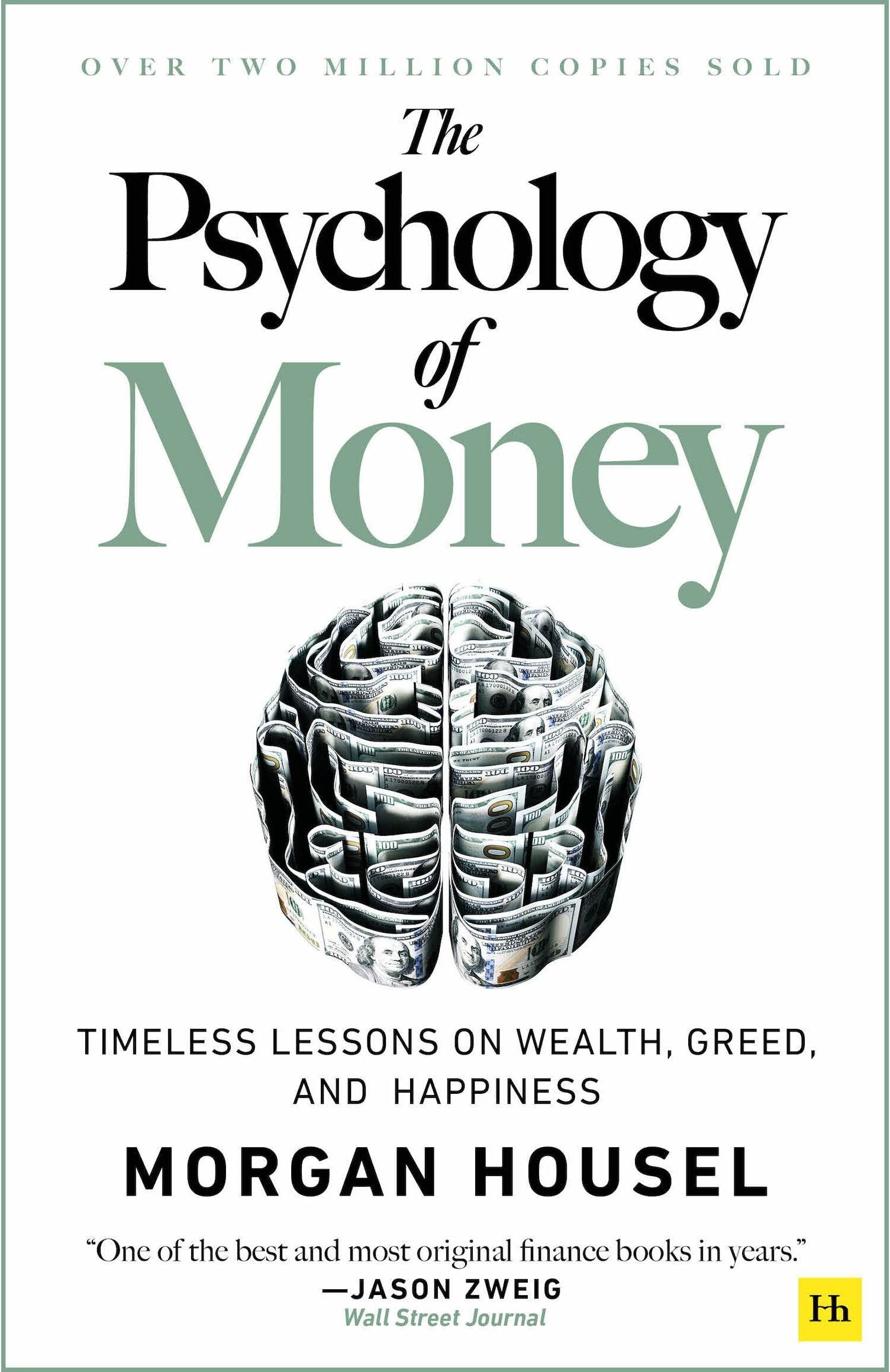
Harriman House The Psychology of Money: Timeless lessons on wealth, greed, and happiness by Morgan HouselDoing well with money isn't necessarily about what you know. It's about how you behave. And behavior is hard to teach, even to really smart people.Money investing, personal finance, and business decisions is typically taught as a math-based field, where data and formulas tell us exactly what to do. But in the real world people don't make financial decisions on a spreadsheet. They make them at the dinner table, or in a meeting room, where personal history, your own unique view of the world, ego, pride, marketing, and odd incentives are scrambled together.In The Psychology of Money, award-winning author Morgan Housel shares 19 short stories exploring the strange ways people think about money and teaches you how to make better sense of one of life's most important topics.10,99 £*Shipping: 2,99 £Secure redirect to the provider
-
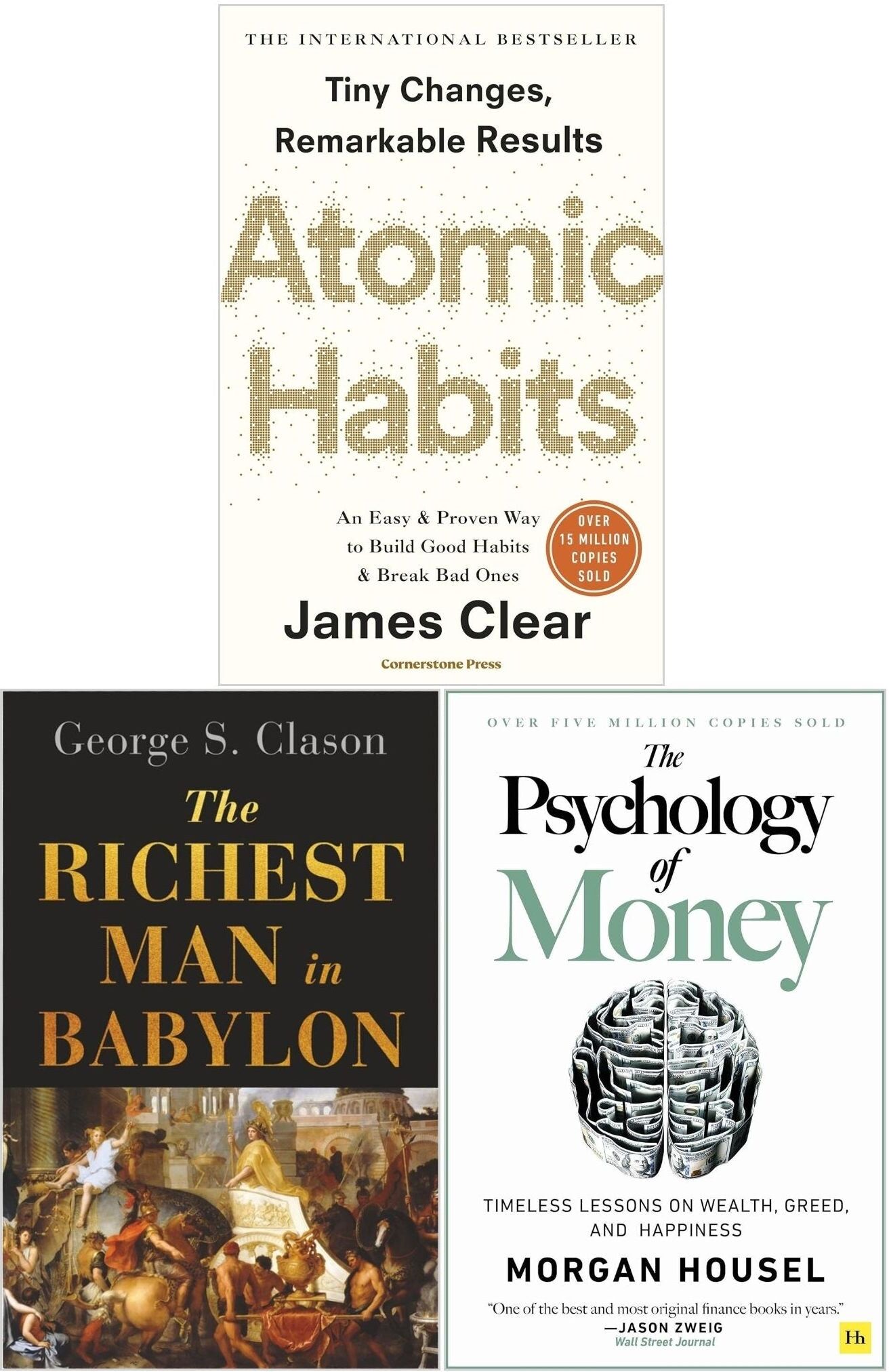
Wilco/Harriman House/Cornerstone The Richest Man In Babylon, The Psychology of Money and Atomic Habits 3 Books SetThe Richest Man In Babylon by George S. Clason This inspirational book is hailed as the greatest of books on finances. It unveils the secrets to wealth, providing priceless suggestions, advice, unforgettable parables, financial problem solving tools, and invaluable information which will get you on your way to riches. It is a must read for all who want financial stability. It rapidly became one of the best-selling books of all time. Through a series of enlightening parables set in the heart of ancient Babylon, Clason provided his readers with economic tips and tools for financial success. The Psychology of Money by Morgan Housel Doing well with money isn't necessarily about what you know. It's about how you behave. And behavior is hard to teach, even to really smart people. Money – investing, personal finance, and business decisions – is typically taught as a math-based field, where data and formulas tell us exactly what to do. But in the real world people don't make financial decisions on a spreadsheet. They make them at the dinner table, or in a meeting room, where personal history, your own unique view of the world, ego, pride, marketing, and odd incentives are scrambled together. Atomic Habits by James Clear Transform your life with tiny changes in behaviour, starting now. People think that when you want to change your life, you need to think big. But world-renowned habits expert James Clear has discovered another way. He knows that real change comes from the compound effect of hundreds of small decisions: doing two push-ups a day, waking up five minutes early, or holding a single short phone call. He calls them atomic habits.22,99 £*Shipping: 2,99 £Secure redirect to the provider
-
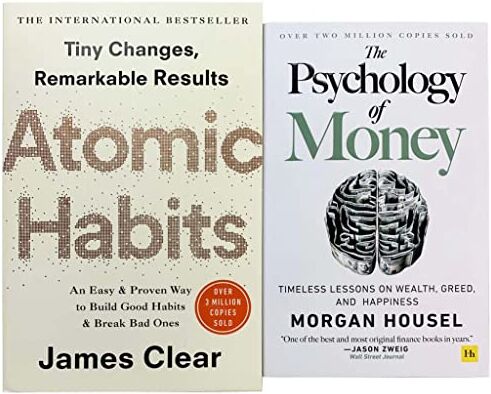
Random House Business/Harriman House ltd Atomic Habits & The Psychology of Money – 2 Books Collection Set Personal Growth, Wealth & Mindset BestsellersAtomic Habits People think that when you want to change your life, you need to think big. But world-renowned habits expert James Clear has discovered another way. He knows that real change comes from the compound effect of hundreds of small decisions: doing two push-ups a day, waking up five minutes early, or holding a single short phone call. He calls them atomic habits. In this ground-breaking book, Clears reveals exactly how these minuscule changes can grow into such life-altering outcomes. He uncovers a handful of simple life hacks (the forgotten art of Habit Stacking, the unexpected power of the Two Minute Rule, or the trick to entering the Goldilocks Zone), and delves into cutting-edge psychology and neuroscience to explain why they matter. Along the way, he tells inspiring stories of Olympic gold medalists, leading CEOs, and distinguished scientists who have used the science of tiny habits to stay productive, motivated, and happy. The Psychology of Money Doing well with money isn't necessarily about what you know. It's about how you behave. And behaviour is hard to teach, even to really smart people. Money investing, personal finance, and business decisions is typically taught as a math-based field, where data and formulas tell us exactly what to do. But in the real world people don't make financial decisions on a spreadsheet. They make them at the dinner table, or in a meeting room, where personal history, your own unique view of the world, ego, pride, marketing, and odd incentives are scrambled together. In The Psychology of Money, award-winning author Morgan Housel shares 19 short stories exploring the strange ways people think about money and teaches you how to make better sense of one of life's most important topics.15,99 £*Shipping: 2,99 £Secure redirect to the provider

-
What could an experiment in advertising psychology look like?
An experiment in advertising psychology could involve testing the effectiveness of different advertising strategies on consumer behavior. For example, researchers could design a study where participants are exposed to different types of advertisements (e.g. emotional appeal, rational appeal, fear appeal) and their subsequent purchasing decisions are measured. By analyzing the impact of these different strategies on consumer behavior, researchers can gain insights into how advertising influences decision-making processes. Additionally, researchers could also investigate the role of factors such as color, imagery, and language in advertising to understand how these elements affect consumer perceptions and preferences. **
-
How can we avoid product manipulation through advertising psychology?
To avoid product manipulation through advertising psychology, companies can be transparent and honest in their marketing strategies. They can provide clear and accurate information about their products, avoiding exaggerated claims or misleading tactics. Consumers can also educate themselves about common advertising techniques and be critical of the messages they are exposed to. Additionally, regulations and guidelines can be put in place to monitor and restrict deceptive advertising practices. **
-
How can we avoid the manipulation of products through advertising psychology?
To avoid the manipulation of products through advertising psychology, consumers can become more aware of the tactics used by advertisers. This includes being critical of the emotional appeals, social proof, and scarcity tactics often used in advertising. Additionally, consumers can seek out information from multiple sources and do their own research before making purchasing decisions. Regulation and oversight of advertising practices can also help to minimize the manipulation of products through advertising psychology. Finally, promoting media literacy and critical thinking skills can empower consumers to make more informed choices. **
-
What does a case analysis look like in psychology?
A case analysis in psychology typically involves examining a specific individual or group's behavior, thoughts, emotions, and experiences in depth. It often includes gathering information from multiple sources such as interviews, observations, and psychological assessments. The analysis aims to identify patterns, underlying causes, and potential interventions to help understand and address the individual's or group's psychological issues. Additionally, a case analysis in psychology may involve applying relevant psychological theories and research to provide a comprehensive understanding of the case. **
What is the difference between psychology and health psychology?
Psychology is the study of the human mind and behavior, encompassing a wide range of topics such as cognition, emotion, development, and social interactions. Health psychology, on the other hand, focuses specifically on the psychological factors that influence physical health and illness. This includes understanding how behaviors, emotions, and beliefs impact health outcomes, as well as developing interventions to promote health and prevent illness. In essence, health psychology is a specialized field within psychology that applies psychological principles to the promotion and maintenance of physical health. **
What is the difference between psychology and applied psychology?
Psychology is the scientific study of human behavior and mental processes, focusing on understanding individual and group behavior through research and experimentation. Applied psychology, on the other hand, is the practical application of psychological principles and theories to real-world issues and problems. It involves using psychological knowledge and techniques to address specific issues in various fields such as clinical psychology, counseling, organizational psychology, and sports psychology. While psychology focuses on understanding human behavior and mental processes, applied psychology focuses on using this knowledge to solve practical problems and improve people's lives. **
Top-Angebote
Products related to Harriman-House-The-Psychology:
-
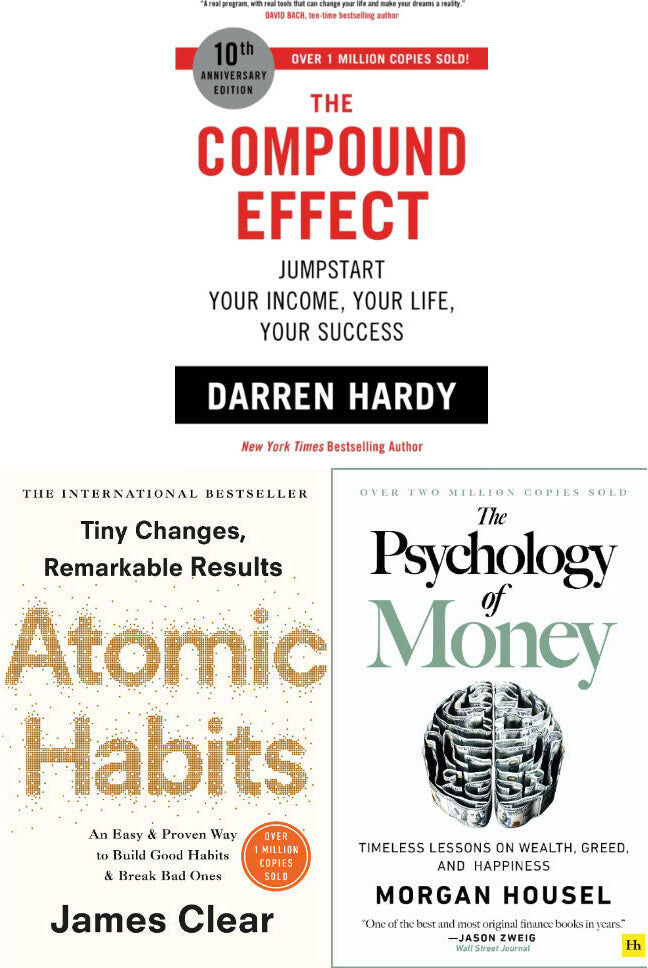
Harriman House Atomic Habits, The Compound Effect, The Psychology of Money 3 Books Collection SetAtomic Habits People think that when you want to change your life, you need to think big. But world-renowned habits expert James Clear has discovered another way. He knows that real change comes from the compound effect of hundreds of small decisions: doing two push-ups a day, waking up five minutes early, or holding a single short phone call. The Compound Effect As the central curator of the success media industry for over 25 years, author Darren Hardy has heard it all, seen it all, and tried most of it. This book reveals the core principles that drive success. The Compound Effect contains the essence of what every superachiever needs to know, practice, and master to obtain extraordinary success. Inside you will find strategies on: How to win--every time! The Psychology of Money Doing well with money isn't necessarily about what you know. It's about how you behave. And behavior is hard to teach, even to really smart people. Money investing, personal finance, and business decisions is typically taught as a math-based field, where data and formulas tell us exactly what to do. But in the real world people don't make financial decisions on a spreadsheet.22,95 £*Shipping: 2,99 £Secure redirect to the provider
-
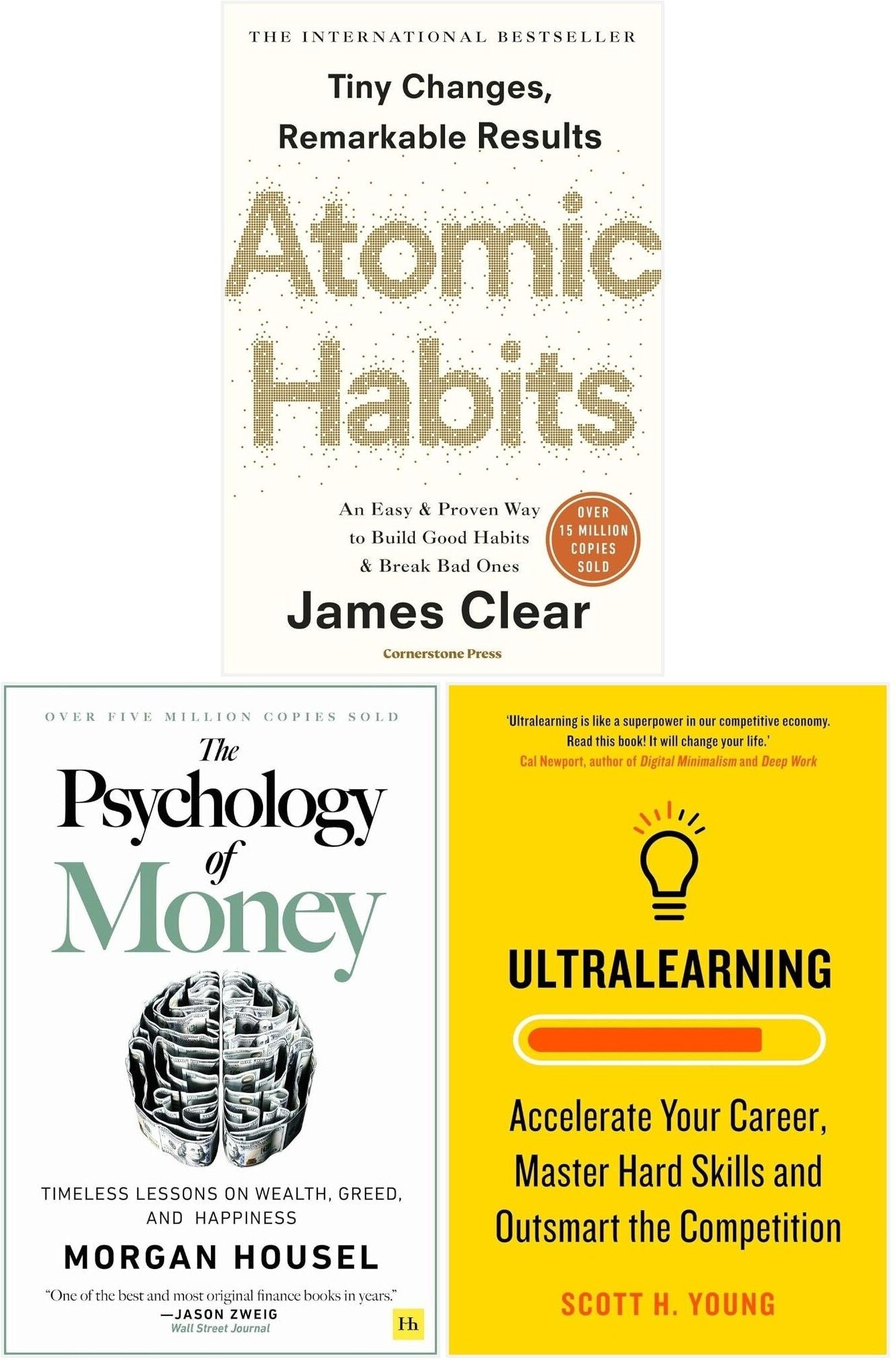
Thorsons/Cornerstone/Harriman House Ultralearning, Atomic Habits and The Psychology of Money 3 Books SetUltralearning Future-proof your career and maximize your competitive advantage by learning the skill necessary to stay relevant, reinvent yourself, and adapt to whatever the workplace throws your way in this essential guide. Faced with tumultuous economic times and rapid technological change, staying ahead in your career depends on continual learning―a lifelong mastery of new ideas, subjects, and skills. If you want to accomplish more and stand apart from everyone else, you need to become an ultralearner. Atomic Habits Transform your life with tiny changes in behaviour, starting now. People think that when you want to change your life, you need to think big. But world-renowned habits expert James Clear has discovered another way. He knows that real change comes from the compound effect of hundreds of small decisions: doing two push-ups a day, waking up five minutes early, or holding a single short phone call. The Psychology of Money Doing well with money isn't necessarily about what you know. It's about how you behave. And behavior is hard to teach, even to really smart people. Money investing, personal finance, and business decisions is typically taught as a math-based field, where data and formulas tell us exactly what to do. But in the real world people don't make financial decisions on a spreadsheet. They make them at the dinner table, or in a meeting room, where personal history, your own unique view of the world, ego, pride, marketing, and odd incentives are scrambled together.29,99 £*Shipping: 2,99 £Secure redirect to the provider
-
Harriman House Same as Ever & The Psychology Of Money 2 Books Collection Set by Morgan HouselTitles in this set:1. Same as Ever2. The Psychology of MoneyDescription:Same as Ever When planning for the future we often ask, “What will the economy be doing this time next year?” Or, “What will be different ten years from now?”But forecasting is hard. The important events that will shape the future are inherently unpredictable.Instead, we should be asking a different question:What will be the same ten years from now?What will be the same one hundred years from now?Knowledge of the things that never change is more useful, and more important, than an uncertain prediction of an unknowable future.In Same As Ever, bestselling author Morgan Housel shares 24 short stories about the ways that life, behaviour, and business will always be the same.Armed with this knowledge of the unchanging, you will have a powerful new ability to think about risk, opportunity, and how to navigate the uncertainty of the future.The Psychology of Money Doing well with money isn't necessarily about what you know. It's about how you behave. And behavior is hard to teach, even to really smart people.Money investing, personal finance, and business decisions is typically taught as a math-based field, where data and formulas tell us exactly what to do. But in the real world people don't make financial decisions on a spreadsheet. They make them at the dinner table, or in a meeting room, where personal history, your own unique view of the world, ego, pride, marketing, and odd incentives are scrambled together.In The Psychology of Money, award-winning author Morgan Housel shares 19 short stories exploring the strange ways people think about money and teaches you how to make better sense of one of life's most important topics.14,50 £*Shipping: 2,99 £Secure redirect to the provider
-
Harriman House The Psychology of Money: Timeless lessons on wealth, greed, and happiness by Morgan HouselDoing well with money isn't necessarily about what you know. It's about how you behave. And behavior is hard to teach, even to really smart people.Money investing, personal finance, and business decisions is typically taught as a math-based field, where data and formulas tell us exactly what to do. But in the real world people don't make financial decisions on a spreadsheet. They make them at the dinner table, or in a meeting room, where personal history, your own unique view of the world, ego, pride, marketing, and odd incentives are scrambled together.In The Psychology of Money, award-winning author Morgan Housel shares 19 short stories exploring the strange ways people think about money and teaches you how to make better sense of one of life's most important topics.10,99 £*Shipping: 2,99 £Secure redirect to the provider
-
What is advertising psychology?
Advertising psychology is the study of how advertising influences consumer behavior and decision-making. It involves understanding the psychological processes that occur when individuals are exposed to advertisements, such as attention, perception, memory, and motivation. By applying principles from psychology, advertisers can create more effective and persuasive campaigns that resonate with their target audience and ultimately drive sales. Advertising psychology also explores how emotions, attitudes, and beliefs can be influenced through advertising messages. **
-
What is the difference between business psychology and marketing?
Business psychology focuses on understanding human behavior within the workplace, including topics such as employee motivation, leadership, and organizational culture. It aims to improve individual and organizational performance through the application of psychological principles. On the other hand, marketing focuses on understanding consumer behavior and creating strategies to promote and sell products or services. It involves market research, advertising, branding, and customer relationship management. While both fields involve understanding human behavior, business psychology focuses on internal organizational dynamics, while marketing focuses on external consumer behavior and promotion. **
-
What could an experiment in advertising psychology look like?
An experiment in advertising psychology could involve testing the effectiveness of different advertising strategies on consumer behavior. For example, researchers could design a study where participants are exposed to different types of advertisements (e.g. emotional appeal, rational appeal, fear appeal) and their subsequent purchasing decisions are measured. By analyzing the impact of these different strategies on consumer behavior, researchers can gain insights into how advertising influences decision-making processes. Additionally, researchers could also investigate the role of factors such as color, imagery, and language in advertising to understand how these elements affect consumer perceptions and preferences. **
-
How can we avoid product manipulation through advertising psychology?
To avoid product manipulation through advertising psychology, companies can be transparent and honest in their marketing strategies. They can provide clear and accurate information about their products, avoiding exaggerated claims or misleading tactics. Consumers can also educate themselves about common advertising techniques and be critical of the messages they are exposed to. Additionally, regulations and guidelines can be put in place to monitor and restrict deceptive advertising practices. **
Similar search terms for Harriman-House-The-Psychology
-
Wilco/Harriman House/Cornerstone The Richest Man In Babylon, The Psychology of Money and Atomic Habits 3 Books SetThe Richest Man In Babylon by George S. Clason This inspirational book is hailed as the greatest of books on finances. It unveils the secrets to wealth, providing priceless suggestions, advice, unforgettable parables, financial problem solving tools, and invaluable information which will get you on your way to riches. It is a must read for all who want financial stability. It rapidly became one of the best-selling books of all time. Through a series of enlightening parables set in the heart of ancient Babylon, Clason provided his readers with economic tips and tools for financial success. The Psychology of Money by Morgan Housel Doing well with money isn't necessarily about what you know. It's about how you behave. And behavior is hard to teach, even to really smart people. Money – investing, personal finance, and business decisions – is typically taught as a math-based field, where data and formulas tell us exactly what to do. But in the real world people don't make financial decisions on a spreadsheet. They make them at the dinner table, or in a meeting room, where personal history, your own unique view of the world, ego, pride, marketing, and odd incentives are scrambled together. Atomic Habits by James Clear Transform your life with tiny changes in behaviour, starting now. People think that when you want to change your life, you need to think big. But world-renowned habits expert James Clear has discovered another way. He knows that real change comes from the compound effect of hundreds of small decisions: doing two push-ups a day, waking up five minutes early, or holding a single short phone call. He calls them atomic habits.22,99 £*Shipping: 2,99 £Secure redirect to the provider
-
Random House Business/Harriman House ltd Atomic Habits & The Psychology of Money – 2 Books Collection Set Personal Growth, Wealth & Mindset BestsellersAtomic Habits People think that when you want to change your life, you need to think big. But world-renowned habits expert James Clear has discovered another way. He knows that real change comes from the compound effect of hundreds of small decisions: doing two push-ups a day, waking up five minutes early, or holding a single short phone call. He calls them atomic habits. In this ground-breaking book, Clears reveals exactly how these minuscule changes can grow into such life-altering outcomes. He uncovers a handful of simple life hacks (the forgotten art of Habit Stacking, the unexpected power of the Two Minute Rule, or the trick to entering the Goldilocks Zone), and delves into cutting-edge psychology and neuroscience to explain why they matter. Along the way, he tells inspiring stories of Olympic gold medalists, leading CEOs, and distinguished scientists who have used the science of tiny habits to stay productive, motivated, and happy. The Psychology of Money Doing well with money isn't necessarily about what you know. It's about how you behave. And behaviour is hard to teach, even to really smart people. Money investing, personal finance, and business decisions is typically taught as a math-based field, where data and formulas tell us exactly what to do. But in the real world people don't make financial decisions on a spreadsheet. They make them at the dinner table, or in a meeting room, where personal history, your own unique view of the world, ego, pride, marketing, and odd incentives are scrambled together. In The Psychology of Money, award-winning author Morgan Housel shares 19 short stories exploring the strange ways people think about money and teaches you how to make better sense of one of life's most important topics.15,99 £*Shipping: 2,99 £Secure redirect to the provider
-
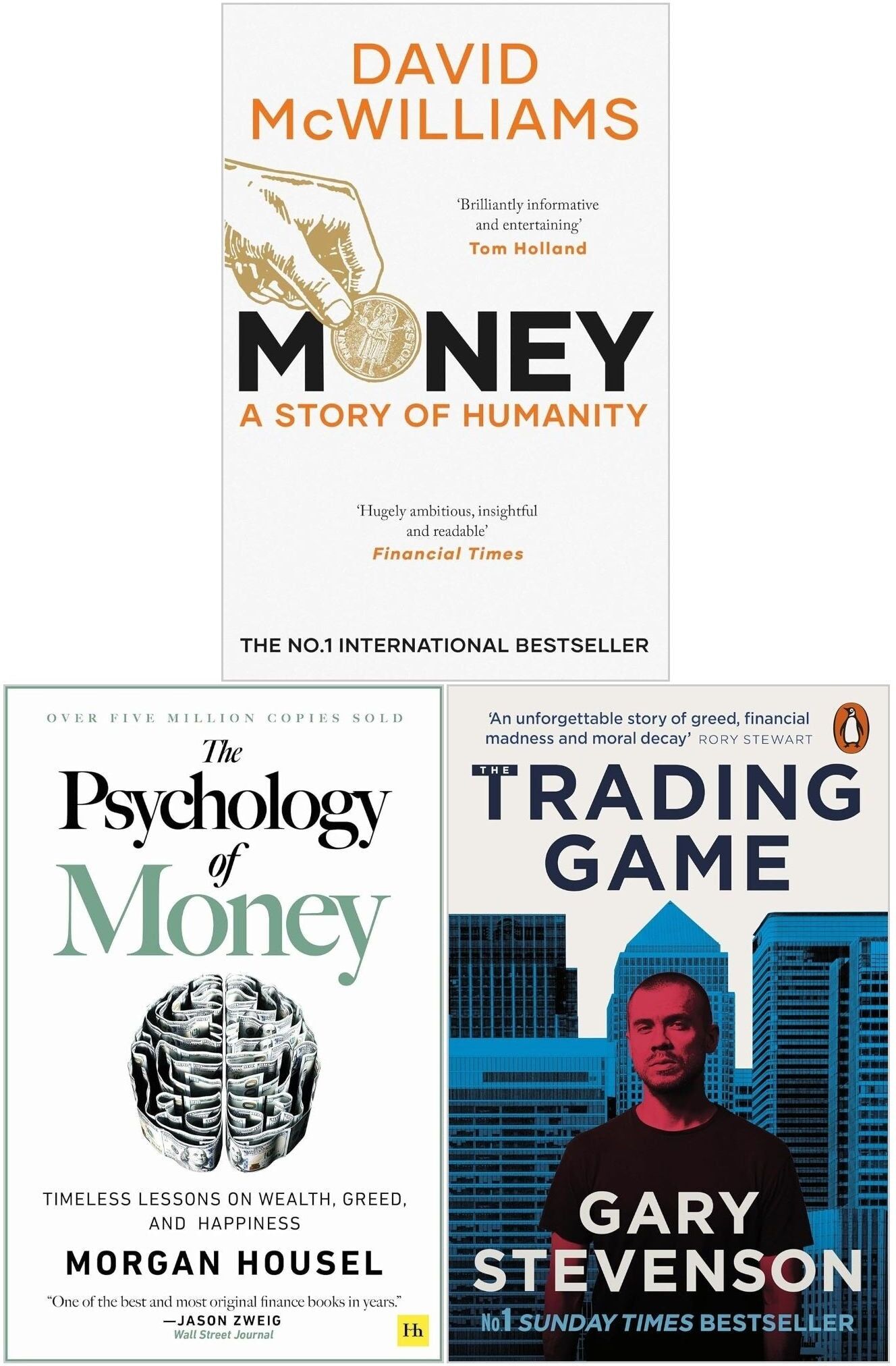
Harriman House Psychology of Money, The Trading Game and Money: A Story of Humanity 3 Books Collection SetPsychology of Money by Morgan Housel Doing well with money isn't necessarily about what you know. It's about how you behave. And behavior is hard to teach, even to really smart people. Money – investing, personal finance, and business decisions – is typically taught as a math-based field, where data and formulas tell us exactly what to do. But in the real world people don't make financial decisions on a spreadsheet. They make them at the dinner table, or in a meeting room, where personal history, your own unique view of the world, ego, pride, marketing, and odd incentives are scrambled together. The Trading Game by Gary Stevenson Ever since he was a kid, kicking broken footballs on the streets of East London in the shadow of Canary Wharf's skyscrapers, Gary wanted something better. Something a whole lot bigger. Then he won a competition run by a bank: 'The Trading Game'. The prize: a golden ticket to a new life, as the youngest trader in the whole city. A place where you could make more money than you'd ever imagined. Where your colleagues are dysfunctional maths geniuses, overfed public schoolboys and borderline psychopaths, yet they start to feel like family. Where soon you're the bank's most profitable trader, dealing in nearly a trillion dollars. A day. Where you dream of numbers in your sleep - and then stop sleeping at all. Money: A Story of Humanity by David McWilliams MONEY. The object of our desires. The engine of our genius. Humanity’s greatest invention. From clay tablets in Mesopotamia to today’s cryptocurrency, global economist David McWilliams takes us on an epic journey of innovation, disruption and transformation that is an astonishing new history of our species. The question is, over 5,000 years, have we changed money – or has money changed us?22,99 £*Shipping: 2,99 £Secure redirect to the provider
-
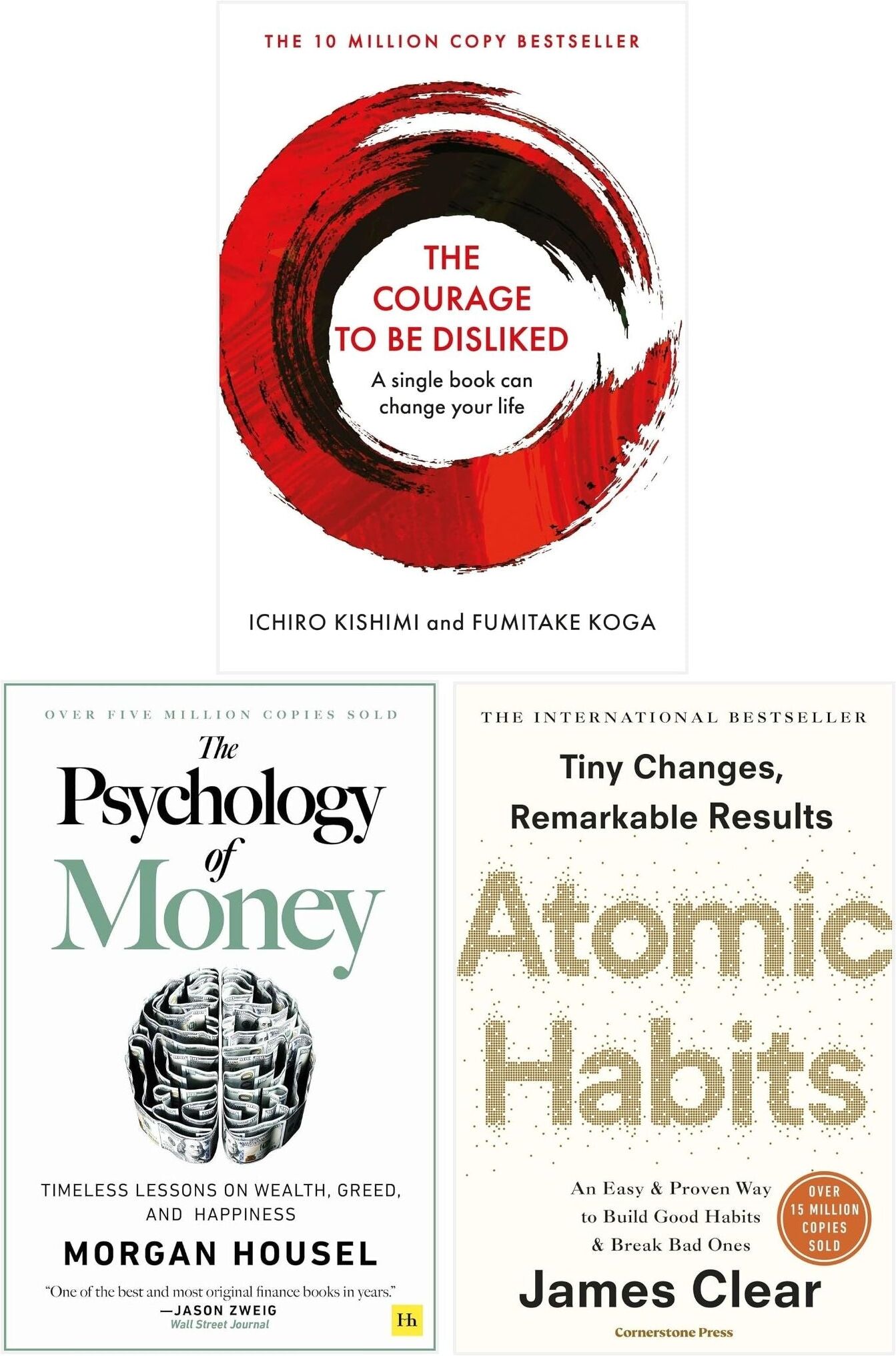
Harriman House The Psychology of Money, Atomic Habits & The Courage to Be Disliked – 3 Book Collection Set Bestselling Self-Development, Personal Finance, Self-HelUpgrade your mindset, habits, and financial thinking with this powerful 3-book collection set, featuring three of the most influential modern self-development titles. This essential bundle includes: The Psychology of Money by Morgan Housel – Discover how emotions and behaviour shape financial decisions and long-term wealth. Atomic Habits by James Clear – Learn how small habits can create powerful, lasting change. The Courage to Be Disliked by Ichiro Kishimi & Fumitake Koga** – Explore a transformative approach to happiness, freedom, and self-acceptance based on Adlerian psychology. Together, these books offer a complete guide to financial wisdom, personal growth, emotional resilience, and habit-building, making this set ideal for anyone looking to improve their life and mindset. Why Readers Love This Collection: Includes 3 bestselling modern self-development books Covers money, habits, mindset, and personal freedom Practical, easy-to-apply life lessons Perfect for beginners and experienced readers alike Ideal gift for motivation and self-improvement A must-have for anyone on a journey of personal growth, this collection delivers powerful insights for building a better, more successful life.22,99 £*Shipping: 2,99 £Secure redirect to the provider
-
How can we avoid the manipulation of products through advertising psychology?
To avoid the manipulation of products through advertising psychology, consumers can become more aware of the tactics used by advertisers. This includes being critical of the emotional appeals, social proof, and scarcity tactics often used in advertising. Additionally, consumers can seek out information from multiple sources and do their own research before making purchasing decisions. Regulation and oversight of advertising practices can also help to minimize the manipulation of products through advertising psychology. Finally, promoting media literacy and critical thinking skills can empower consumers to make more informed choices. **
-
What does a case analysis look like in psychology?
A case analysis in psychology typically involves examining a specific individual or group's behavior, thoughts, emotions, and experiences in depth. It often includes gathering information from multiple sources such as interviews, observations, and psychological assessments. The analysis aims to identify patterns, underlying causes, and potential interventions to help understand and address the individual's or group's psychological issues. Additionally, a case analysis in psychology may involve applying relevant psychological theories and research to provide a comprehensive understanding of the case. **
-
What is the difference between psychology and health psychology?
Psychology is the study of the human mind and behavior, encompassing a wide range of topics such as cognition, emotion, development, and social interactions. Health psychology, on the other hand, focuses specifically on the psychological factors that influence physical health and illness. This includes understanding how behaviors, emotions, and beliefs impact health outcomes, as well as developing interventions to promote health and prevent illness. In essence, health psychology is a specialized field within psychology that applies psychological principles to the promotion and maintenance of physical health. **
-
What is the difference between psychology and applied psychology?
Psychology is the scientific study of human behavior and mental processes, focusing on understanding individual and group behavior through research and experimentation. Applied psychology, on the other hand, is the practical application of psychological principles and theories to real-world issues and problems. It involves using psychological knowledge and techniques to address specific issues in various fields such as clinical psychology, counseling, organizational psychology, and sports psychology. While psychology focuses on understanding human behavior and mental processes, applied psychology focuses on using this knowledge to solve practical problems and improve people's lives. **
* All prices are inclusive of VAT and, if applicable, plus shipping costs. The offer information is based on the details provided by the respective shop and is updated through automated processes. Real-time updates do not occur, so deviations can occur in individual cases. ** Note: Parts of this content were created by AI.